

The big Norwegian lexicon defines research as the systematic creation of new knowledge about culture, society, and individuals. Researchers follow an ethical code that ensures quality and reliability. But creating knowledge is only one part of the equation. Communicating it effectively to the public is equally important for societal impact and democratic discourse.
Yet in 2025, science communication has been challenged by disinformation generated by artificial intelligence. Fake news competes for attention and trust towards established research institutions like UiB is weakened. How do we communicate complex research-based innovation projects to audiences beyond academia?
In autumn semester 2025, we found an innovative solution by partnering with Professor Lars Nyre’s MIX100 course at the Institute for Information Science and Media Studies at UiB. The collaboration gave us something we rarely have time to develop internally: fresh perspectives on how to communicate our innovation projects to the public.
The students’ task was to communicate research-based innovation projects and their value to specific audiences. SFI MediaFutures acted as customer to which the students provided a service.
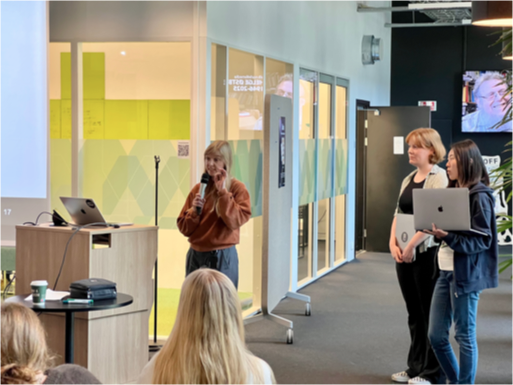
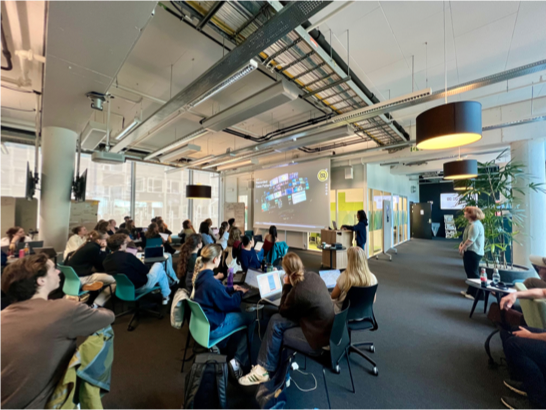
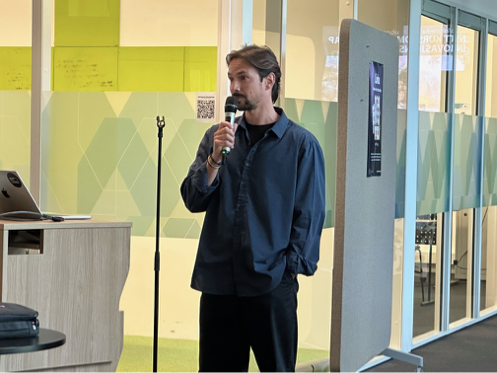
Gamification and handling information overload in 8 projects
The partnership focused on two of our projects as starting points. The Gaze-tracking research by Dr. Yuki Onishi’s, where she uses a gaze-tracking device on TV studio producers to analyse how they use software and hardware in the studio to adjust the setup to improve the use of it, and PhD candidate Svenja Lys Forstner’s trust label research, where she is testing C2PA technology on news images to determine whether visual trust indicators can improve public confidence in news media.
From these two projects, 39 students divided into 8 groups (4 per project) and developed 8 web-based prototypes that addressed different communication challenges. 3 of them were presented at the Media Futures Annual Meeting. The result is a diverse range of solutions which aim to reduce information fatigue, increase understanding of source origins, help young people understand how a TV studio works, and strengthen users’ ability to navigate a complex news landscape. With these projects, the students explored how visual interfaces, interaction design, and communication strategies can help make research and digital media more accessible, more engaging, and more trustworthy for young adults.
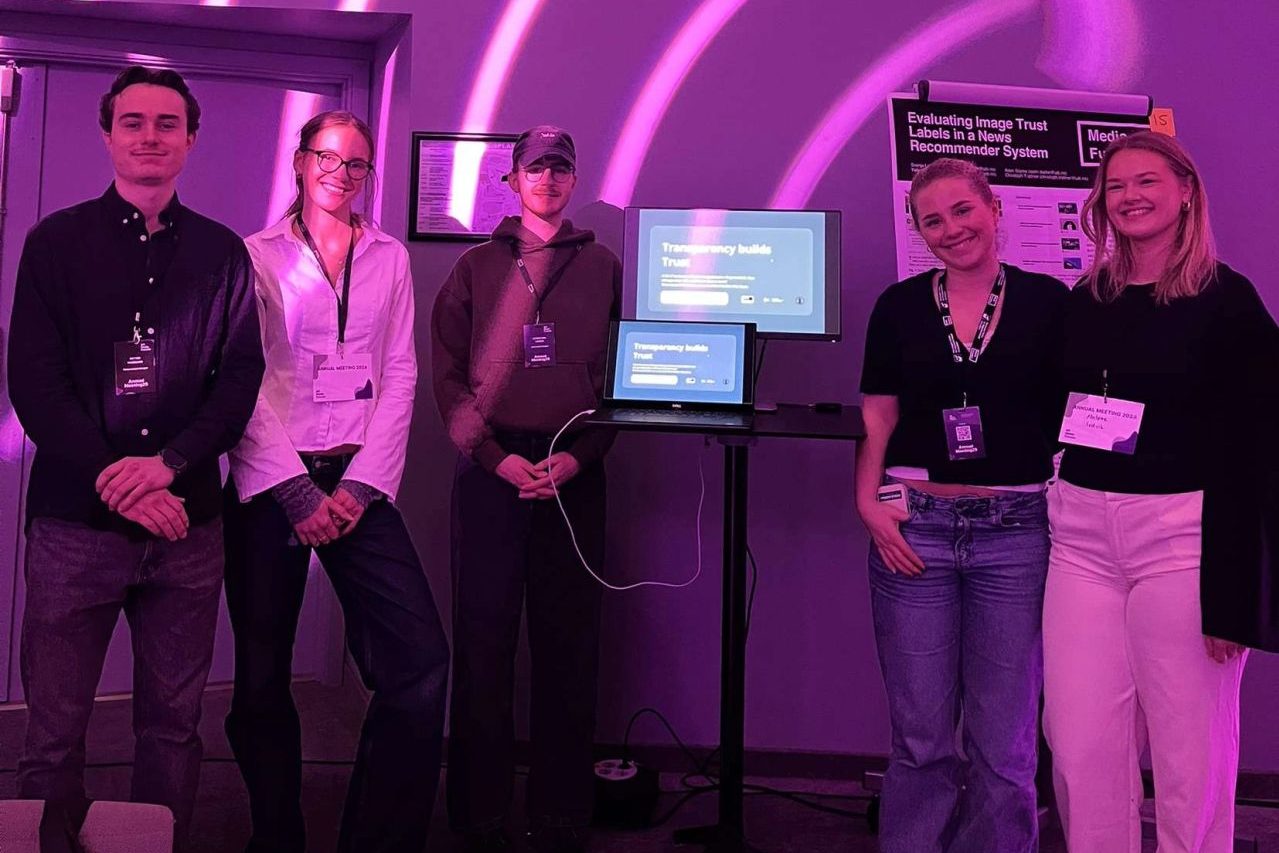
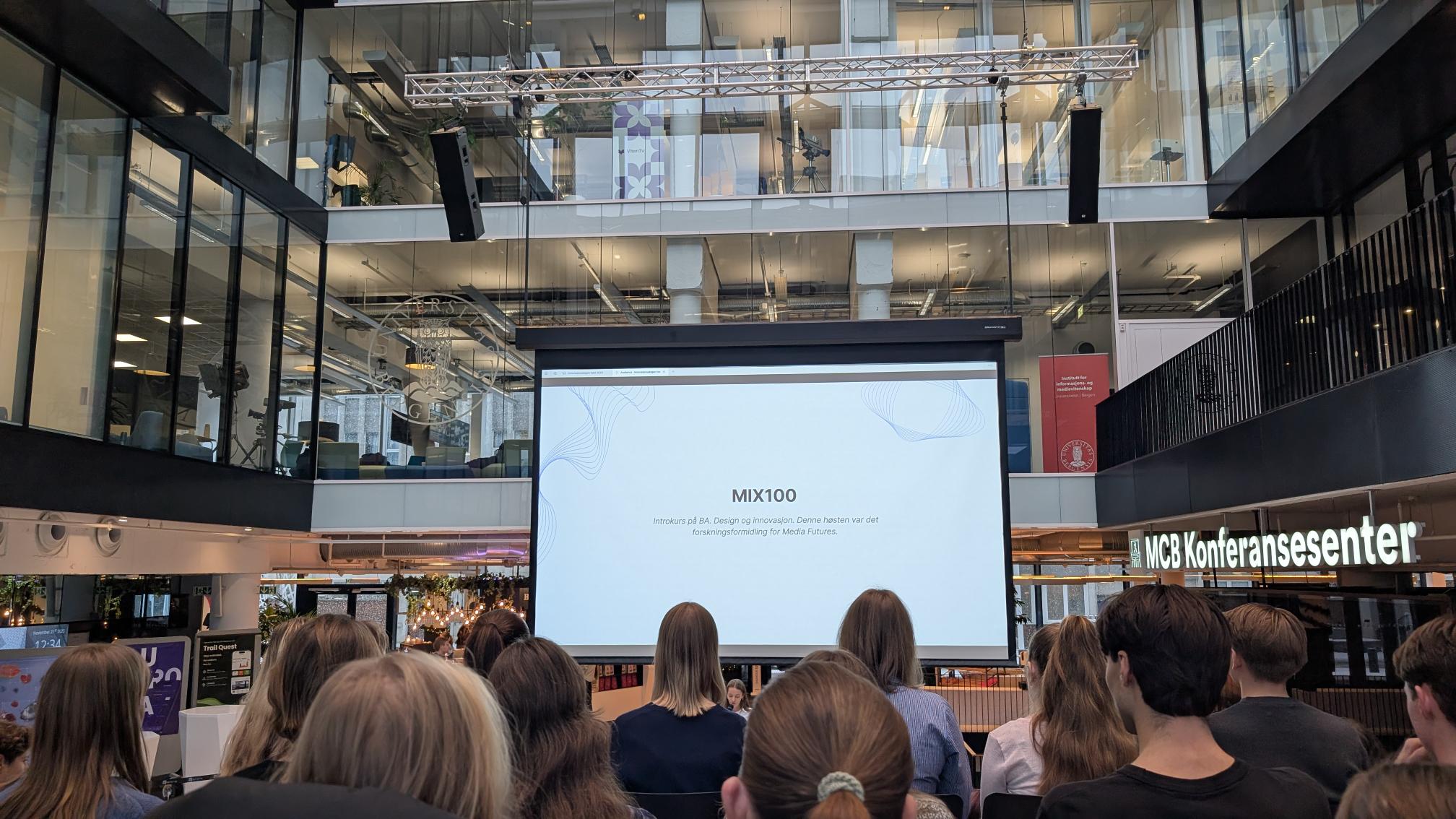
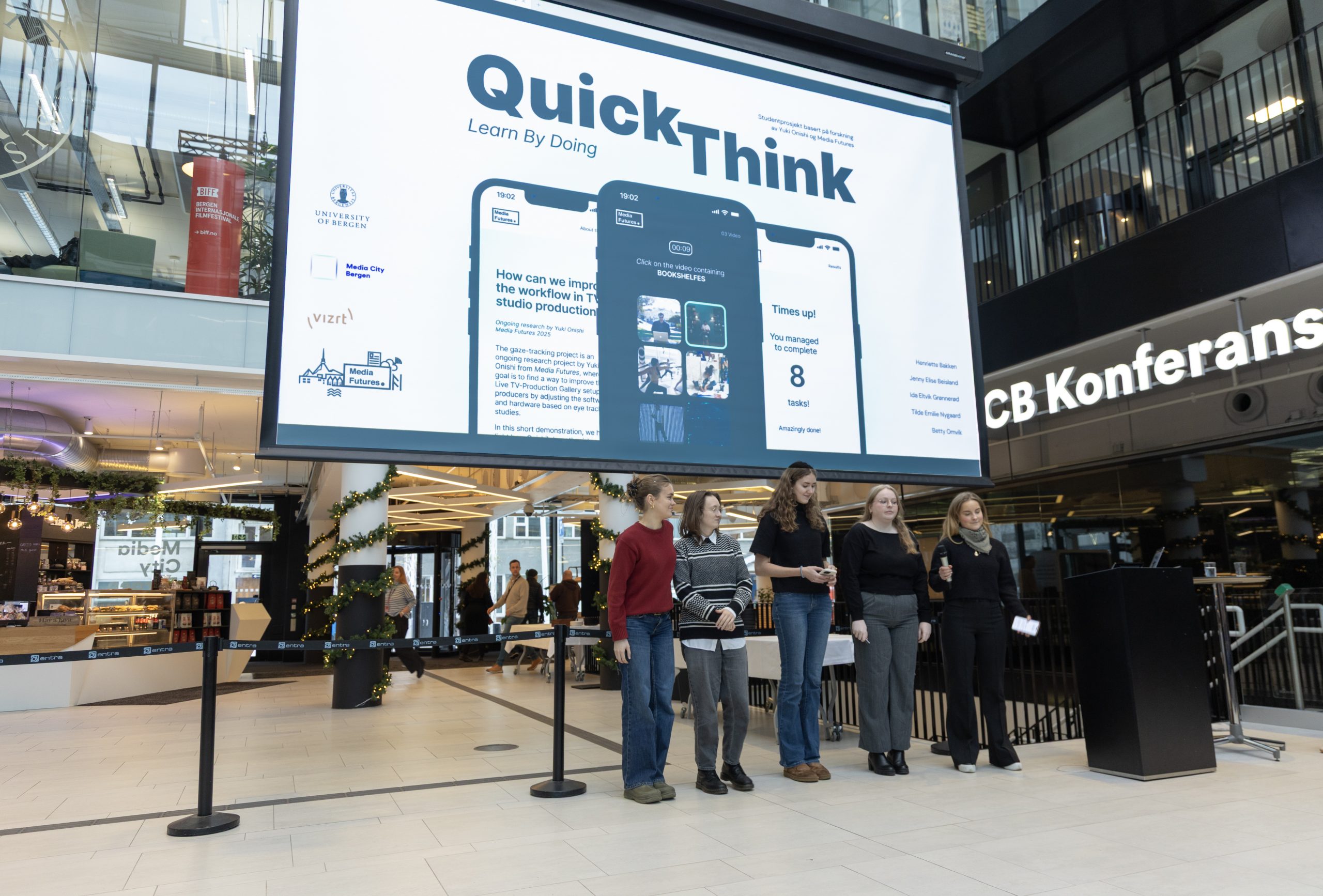
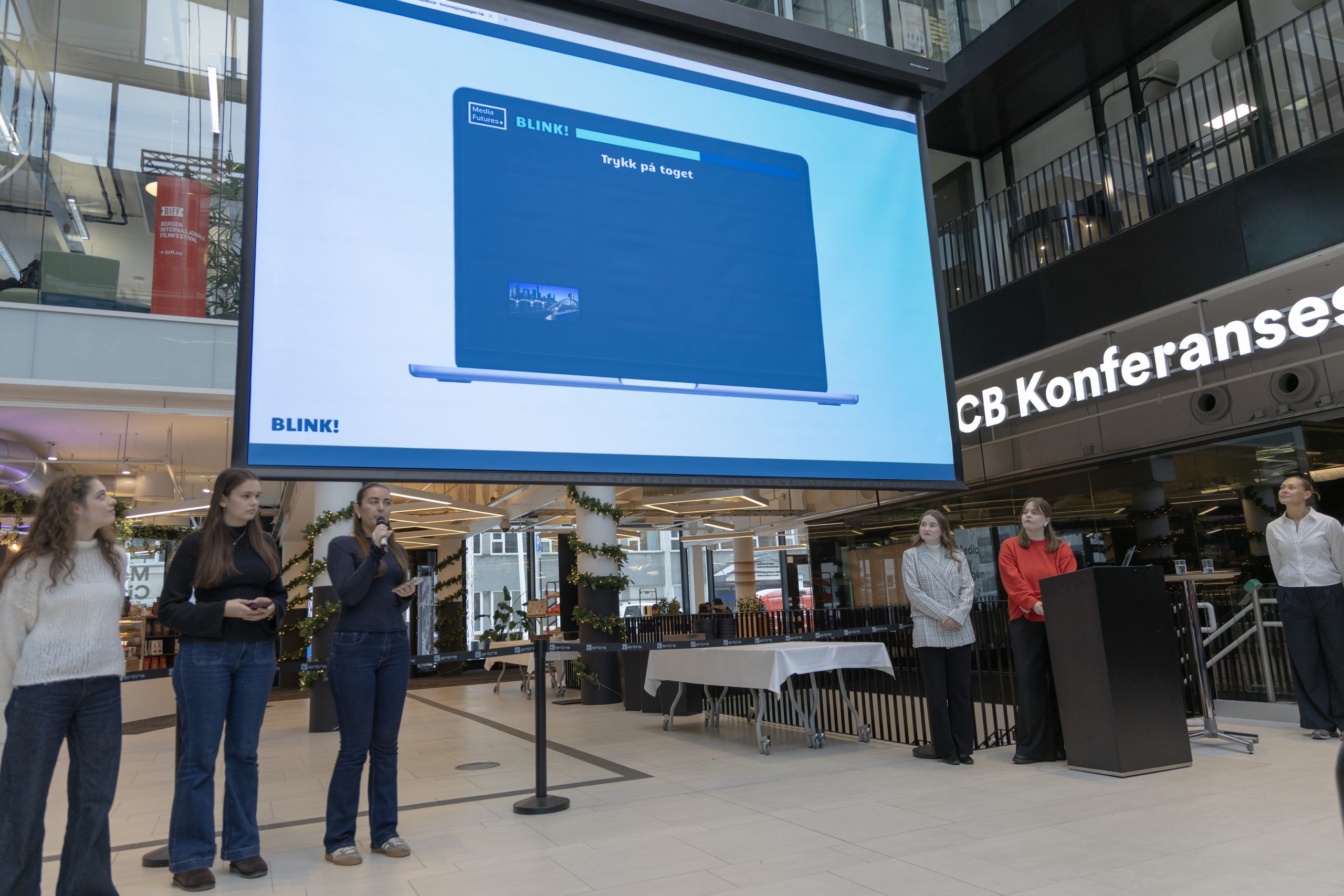
“The prototypes demonstrate how practical design work can support Media Futures research-based innovation work, especially for young people with short attention spans who find traditional research reports boring.” says Siri Andrea Akselvoll, assistant teacher at MIX100.
While the course was led by Lars Nyre, who gave lectures on innovation, usability principles, and academic writing, Frank Wisnes conducted practical workshops on design processes, insight work, concept development, prototyping, and user testing. Our MediaFutures team offered guidance and gave students during the semester feedback to their work.
The need to teach innovation in media education
Lars Nyre says the MIX100 course has never had such a close and successful collaboration with an external partner such as MediaFutures before.
“Our students are truly fortunate to have participated in such a project in their first semester of the bachelor’s degree. They are also proud of their efforts, and many have shared about the project on their LinkedIn accounts”, Nyre says.
As a culture-bearing institution, MediaFutures’ host institution UiB wants to be a strong driving force and contributor in developing more open and digitally accessible research. University director Margareth Hagen defines it as a task to develop the university’s infrastructure and expertise for production and dissemination. She said in her strategy plan that:
“UiB has an open and generous culture of sharing, dedicated to communicating the value of knowledge, democracy, and sustainability. In a time increasingly marked by disinformation, we want to clearly promote research-based knowledge in public discourse. Digitalization is transformative for knowledge dissemination, knowledge sharing, and the advancement of open science.”
One of MediaFutures’ challenges is making complex AI and media research accessible to the public. Innovation coordinator Christopher Senf stresses that these students showed creative ways to do exactly that: ways we wouldn’t have thought of ourselves.
“This collaboration proved that student innovation can be a strategic resource for research centers, and we’re now looking at how to make this a regular part of how MediaFutures communicates its work”.
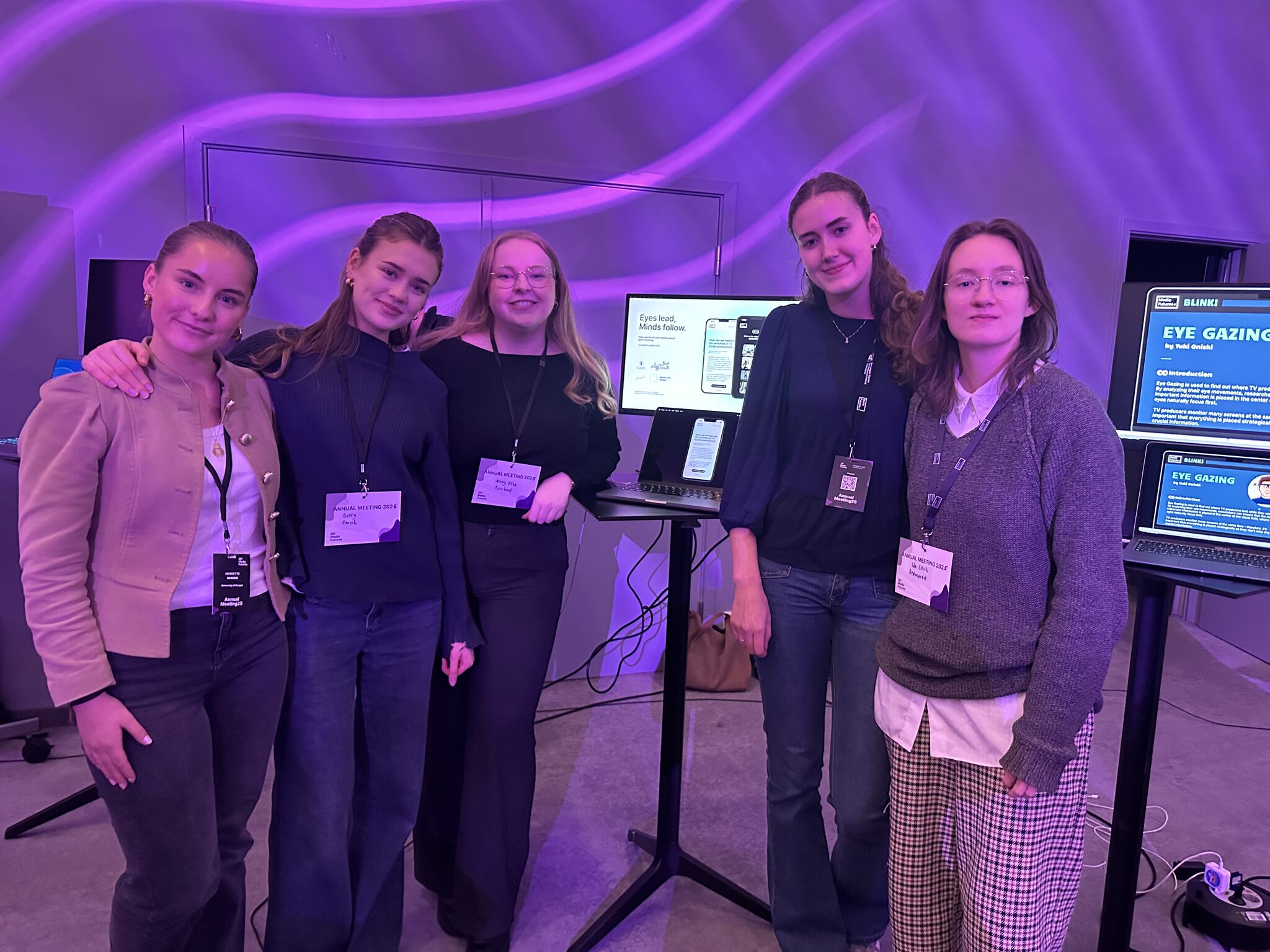
The three students projects which were presented at the MediaFutures Annual Meeting were:
QuickThink: Jenny Elise Beisland, Henriette Bakken, Ida Eltvik Grønnerød and Betty Omvik
Gaze catching: Tilde Stoltenberg, Kataryna Karlyk, Andrea Holstad Grimstad, Astrid Stokker
Trace It: Hanna Kluge, Malene Vedvik, Kasper Emil Larsen, Kaja Lund Næss, Petter Hagelund.