
By
It’s Saturday night. You open a streaming service looking for something new – maybe a documentary or an indie film you have heard about. Instead, the front page is dominated by “Top 10 in Your Country Today”: the same few blockbusters everyone is already talking about. After a few minutes of scrolling, you give up and click one of them. It feels like a choice – but it isn’t entirely yours. The platform has quietly nudged you there, guided by numbers.
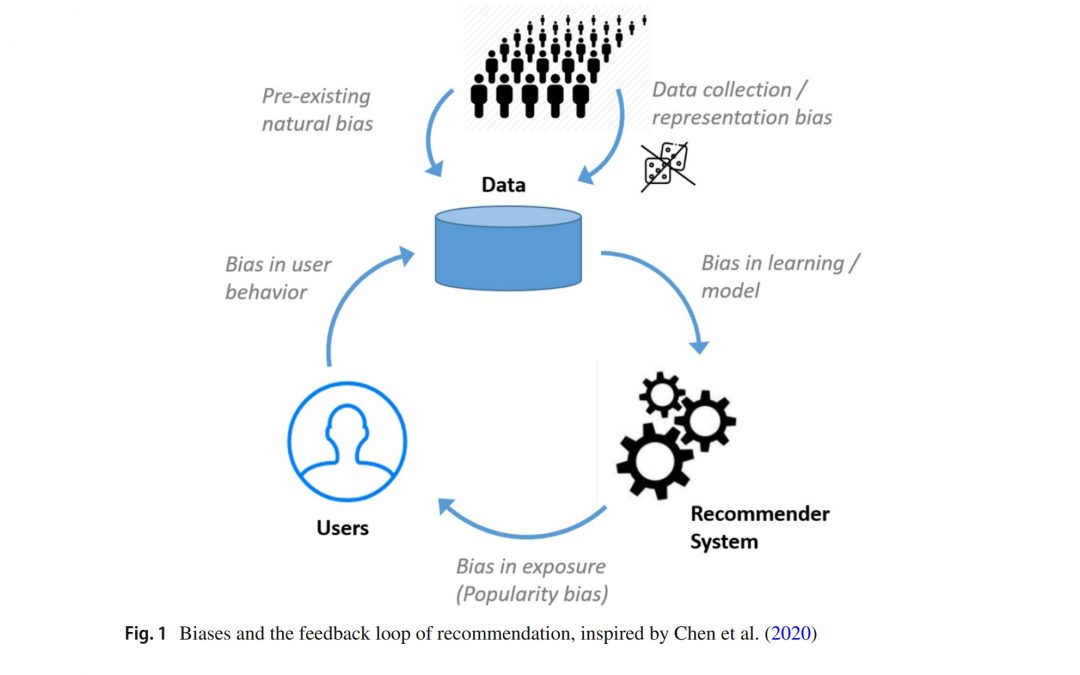
“This is popularity bias in action,” says Klimashevskaia. “Streaming algorithms promote what’s already popular, making those titles even more visible – and harder to escape. The result is a feedback loop where the same few shows dominate attention, while smaller or lesser-known films fade into the background.”
For the past four years, Klimashevskaia has been studying popularity bias in recommender systems as part of her PhD research, examining how algorithms shape what we see – and what we don’t. Her latest publication, a comprehensive literature survey on the topic, has drawn extraordinary attention: accessed more than 12,000 times and cited over 100 times since its oublication date in July 2024. The co-supervisors and co-authors of the study are Mehdi Elahi, Dietmar Jannach, and Christoph Trattner.
“It’s an exceptional accomplishment for a PhD candidate,” says Elahi. The article was published in User Modeling and User-Adapted Interaction (Springer), one of the most selective and influential academic journals in the field – a Level 2 publication according to the Norwegian Register for Scientific Journals, Series and Publishers. Getting accepted there is no small feat. “It’s a top-tier journal,” Elahi explains. The review process is rigorous, and reaching the publication stage can take a year of revisions and feedback.
The survey reviewed 123 scholarly articles related to the topic of popularity bias, drawing from major research databases including ACM Digital Library, ScienceDirect, SpringerLink, and IEEE.
“This work has, in a way, become the magnum opus of my PhD,” Klimashevskaia says. “I learned a lot through the long process of writing it and tried to share that knowledge with the community. Seeing that people are actually using it is incredibly rewarding.”
The “Rich Get Richer” Effect
“On the surface, recommending what’s popular doesn’t seem harmful,” Klimashevskaia explains. “After all, bestseller lists and top charts existed long before algorithms.”
Yet research shows how this seemingly harmless logic can have unintended consequences in the digital world. When recommender systems rely too heavily on what is already trending, they risk narrowing opportunities for diversity and discovery.
“The algorithm starts to amplify what is already visible, while everything else slowly disappears from view,” she says. This creates a self-reinforcing cycle – known as “the rich get richer” or “Matthew Effect” – where popular items continue to dominate attention while new or niche content remains unseen. Over time, such bias doesn’t just limit users’ choices; it can reduce fairness, stifle innovation, and even help spread harmful or misleading content.
Seeking ways to counter this effect, Klimashevskaia and her colleagues partnered with TV 2, Norway’s national broadcaster, to test a new approach directly on its movie streaming platform. Unlike most previous studies, which relied on offline simulations, this project was conducted in a live environment, observing real user behavior over four months.
Through A/B testing, the team compared the platform’s existing recommendation system with a method called “calibrated popularity”. The results showed that the new approach successfully reduced popularity bias while maintaining user engagement – demonstrating that recommender systems can be both fair and effective.
“Balancing popularity with diversity is crucial,” Klimashevskaia emphasizes. “Recommender systems need a healthy mix – popular items help build familiarity and trust, but we also need to make room for the unexpected, the new, and the underrepresented.”
This principle also guided her collaboration with VG, Norway’s most-read online newspaper, where she has explored how automated recommendation systems can support editors in curating articles. The study examined how to balance algorithmic suggestions with human judgment, ensuring readers are exposed not only to what’s popular but also to a broader range of relevant and diverse stories.
A Public Defense Ahead
Klimashevskaia’s doctoral journey culminates on December 15, when she will publicly defend her PhD. The event is open to anyone interested in learning more about her work.
More information is available here.